Why Luxury Brands Are Investing in AI Creative Teams
Luxury has always been about anticipation, nuance, and narrative, not just garments, but experiences, atmospheres, and desire.
In 2026, the newest artisans in this pursuit are not human alone: AI creative teams are emerging as collaborators, advisors, and provocateurs, reshaping how haute couture imagines itself.
At first glance, the idea feels counterintuitive. Luxury is intimacy, tactility, and craft; how can an algorithm understand nuance, emotion, or aura? The answer lies not in replacement but in augmentation. AI does not “design” in the traditional sense. It detects patterns of attention, emotional resonance, and cultural currents invisible to human perception. It measures subtle oscillations in engagement, predicts shifts in aesthetic preference, and surfaces hidden opportunities for innovation. In other words, it is a lens into collective taste that humans alone cannot perceive.
Luxury houses employ AI teams not to dilute creativity, but to expand its horizon. Algorithms can model endless permutations of texture, silhouette, and color, an infinite rehearsal space for intuition. A neural network might suggest unexpected material pairings, reveal micro-trends emerging from streetwear ecosystems, or simulate the emotional impact of a color gradient across a collection. The human designer curates, interprets, and emotionally weights these suggestions. Collaboration, not substitution, is the philosophy.
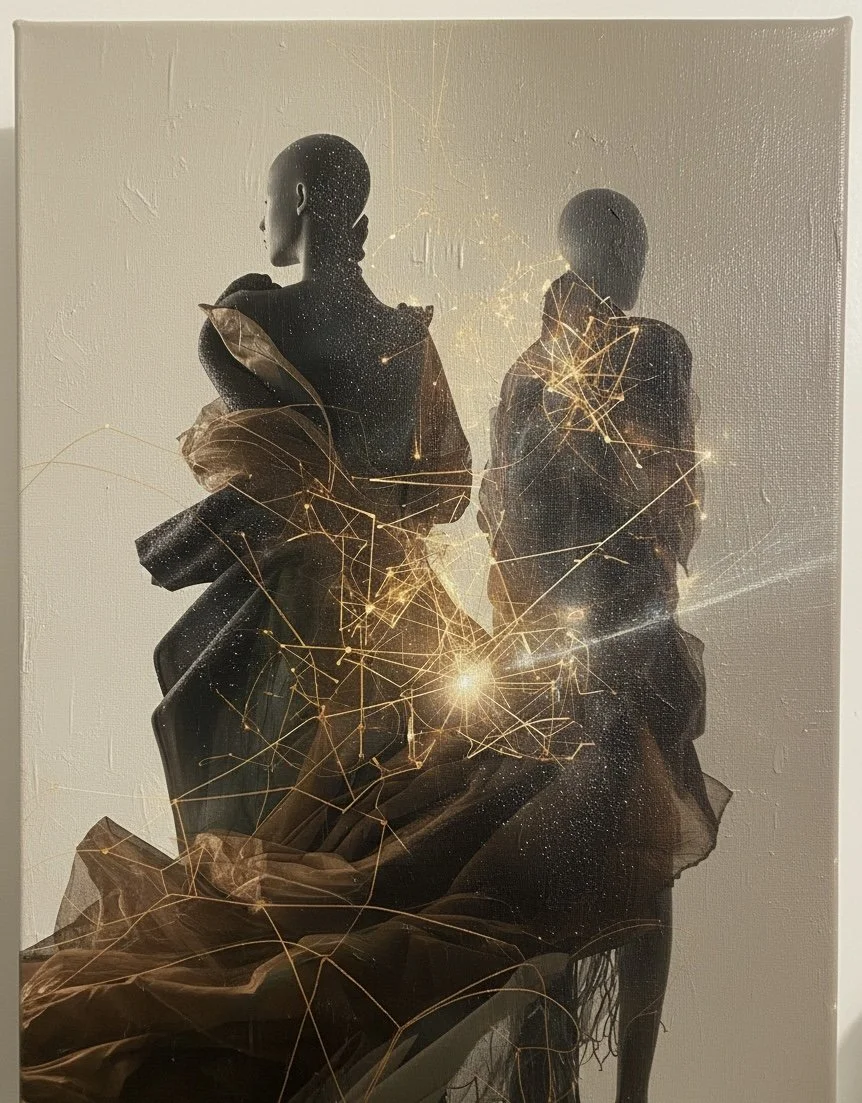
This is a profoundly cinematic practice. Imagine the atelier as a stage: the AI generates invisible scaffolds, whispers possibilities, highlights resonances; the designer responds with brushstrokes of instinct, accentuating ambiguity, hesitation, and narrative. The collection that emerges carries the intelligence of computation and the poetry of human sensibility; a hybrid aura that feels both effortless and meticulously orchestrated.
The move also signals a shift in luxury philosophy. In an era of immediacy, hyperconnectivity, and global attention economies, anticipation becomes the highest currency. AI is not merely a tool; it is a cultural radar, sensing emerging moods, desires, and emotional cadences. Luxury brands that integrate AI are not chasing data, they are conversing with culture itself, translating patterns into tactile experiences that feel intimate, curated, and aspirational.
The subtlety lies in mediation. AI sees the world without bias toward history, nostalgia, or craft. Humans intervene, infusing knowledge, ethics, and cultural literacy into its suggestions. The result is a collection that feels both prophetic and personal; a synthesis of invisible logic and visible emotion, algorithmic insight and artisanal instinct.
In 2026, luxury is no longer just about material excellence; it is about intellectual elegance and cultural foresight. AI creative teams do not replace the human eye. They sharpen it, extend it, and invite the designer to imagine not only what will be desired, but what desire could feel like. The most compelling collections are born in this interstice: between intuition and computation, narrative and prediction, emotion and insight. Here, luxury becomes both an art and a conversation with the future.