Canvas as Cinema: Painting the Fourth Dimension
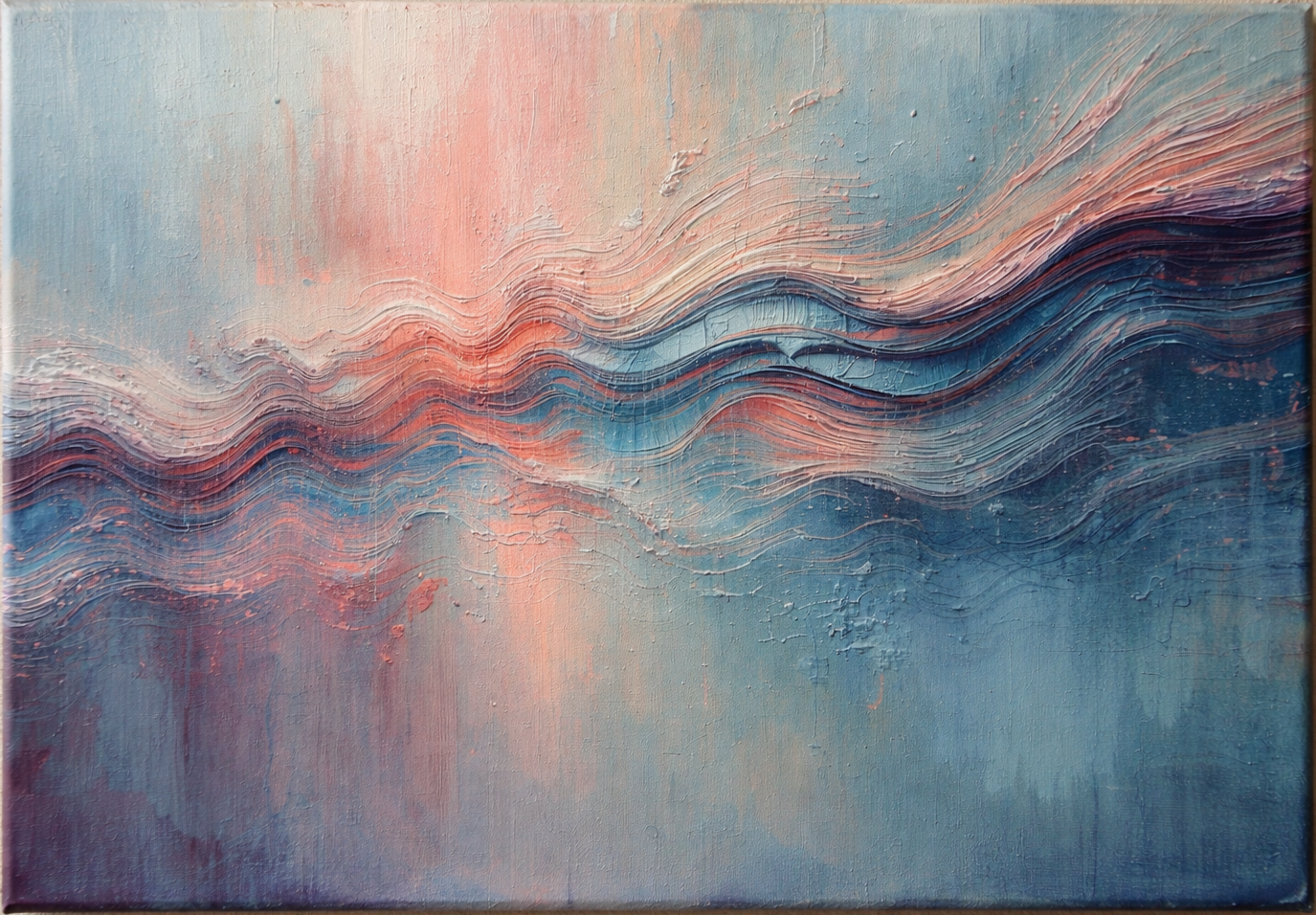
The traditional taxonomy of the "static" image is undergoing a profound ontological shift. While a painting is ostensibly fixed, the contemporary canvas has begun to breathe, pulsing with a latent kinetics that transcends its physical boundaries. In 2026, the dialogue between the brush and the lens has matured into a sophisticated synthesis; painters are no longer merely borrowing cinematic aesthetics, but are instead co-opting the very mechanics of duration, montage, and narrative velocity. The brushstroke functions as a lens, the composition as a rhythmic frame, and the gallery wall as a site of projection where the viewer navigates the fourth dimension of lived experience.
The Choreography of Attention
Cinema provides a structural vocabulary for the management of human attention. The foundational principles of the medium, the establishing shot, the jump cut, the dialectical montage now inform the internal logic of the modern canvas. A sequence of gestural marks may suggest a figure’s transit through space, or a chromatic gradient might register the slow erosion of light across a passing hour.
Much like the atmospheric lingering of Wong Kar-wai’s cinematography where neon reflections in urban rain carry an affective weight, painters now utilize distortion and tonal shifts to imply a narrative arc within a single plane. The viewer is liberated from the role of passive observer, becoming a participant in a temporal rhythm encoded within the materiality of the pigment.
Materiality as Projection
In this new register, texture operates as a cinematic device. An aggressive, tactile impasto might be read as the slow-motion descent of rainfall, while the shimmer of metallic pigments evokes the flicker of a 35mm projector beam. Painting becomes a choreography of light and matter, echoing film’s capacity to manipulate temporal perception.
The contemporary studio increasingly resembles a post-production suite; artists employ digital sequencing and layered transparencies, overlaying moving imagery onto traditional grounds to create hybrid artifacts. These "expanded paintings" transform the still surface into a temporal lens, inviting the eye to linger on the sequences that exist, prospectively and retrospectively, beyond the physical frame.
The Synthesis of Duration and Memory
Philosophically, this practice interrogates the friction between duration and compression. If cinema artificially extends time through the sequence, painting compresses the infinite into a singular, immediate plane. Their intersection produces a fertile dialogue between the fleeting and the monumental.
The Micro-Movement: A single, sweeping gesture may encapsulate a thousand minor agitations.
The Emotional Trajectory: A gradient shift functions as a map of internal sentiment, tracking the movement of a "character" or thought across the frame of the work.
In practice, the artist assumes the role of a director in pre-production. The application of pigment is preceded by storyboarding, rhythmic planning, and motion studies. While AI-assisted mapping and algorithmic color progressions often inform the composition, the final work remains a site of cinematic tension, a deliberate oscillation between the controlled sequence and the improvisational mark.
The Tactile Narrative
Ultimately, the convergence of Canvas as Cinema represents a translation of the temporal into the tactile. It challenges the historical assumption of the "frozen" image, inviting us instead to inhabit the painting as a living environment. In this fusion, the work is no longer bound by the rigidity of the stretcher bar; it breathes, narrates, and vibrates, existing simultaneously as a static object and a fluid, durational experience.