Violence, Rhythm, and Color: Painting in Tarantino’s Key
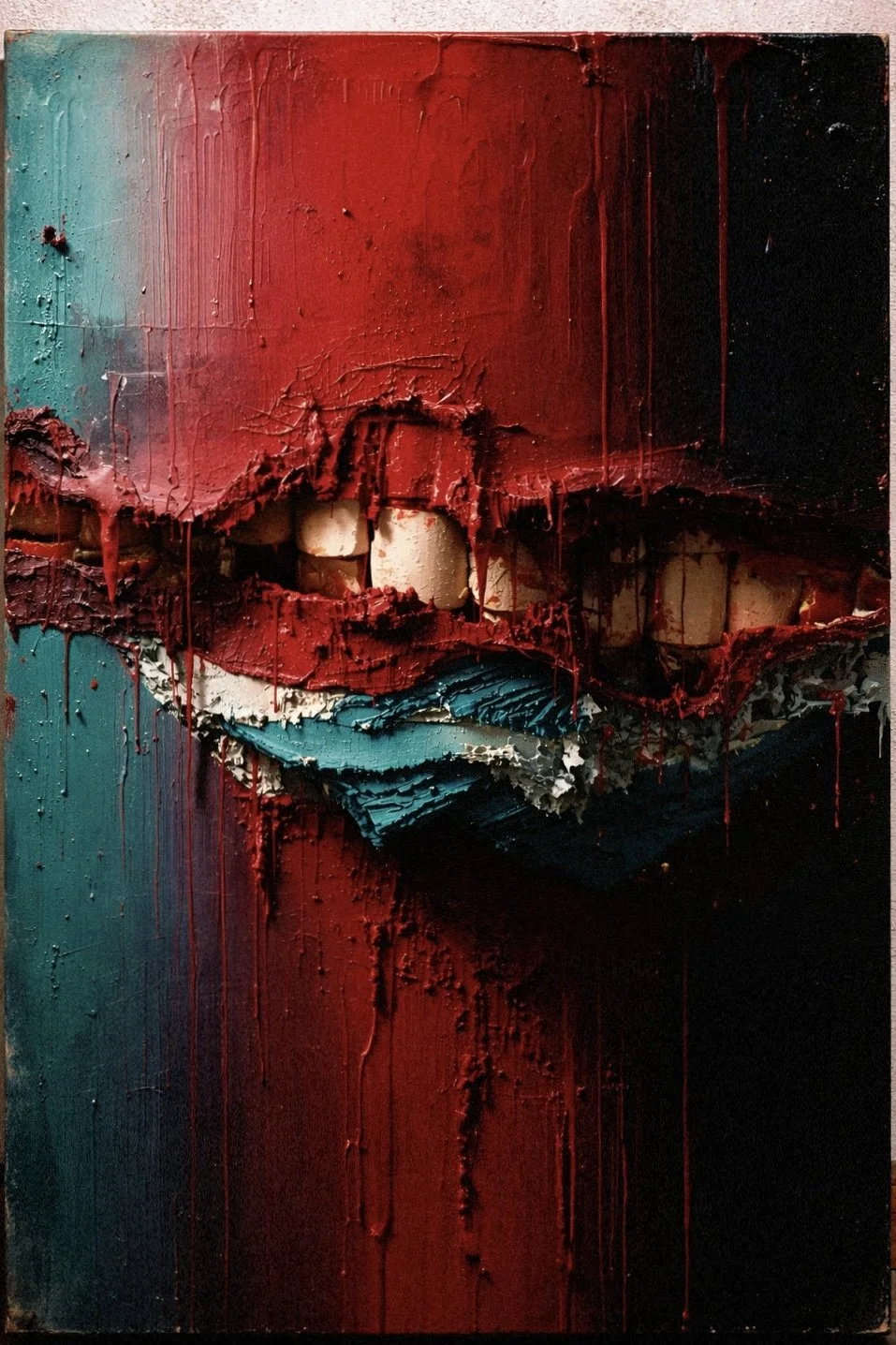
Tarantino’s cinema is a feast for the senses: hyper-stylized, rhythmically precise, morally charged, and colored with an unmistakable pop-culture audacity.
His films are more than stories; they are choreographed visual symphonies, where violence and intimacy coexist, humor punctuates tragedy, and every frame is meticulously composed.
Painting in dialogue with this cinematic energy means embracing contrast, rhythm, and emotional intensity, translating narrative beats into pigment, texture, and gesture.
In my canvas, the Tarantino influence manifests not in literal replication, but in the orchestration of tension and release. A slash of crimson may collide with a blue, a jagged impasto ridge might echo the sudden shock of a narrative twist, while a subtle gradient hums like a lingering soundtrack. Juxtaposition is everything: innocence against aggression, lyricism against chaos, smooth washes against fractured, expressive strokes.
The canvas becomes a stage for moral and emotional choreography, a rhythm you can feel as much as see.
Tarantino’s genius lies in timing and rhythm. Think of the deliberate pacing of Pulp Fiction: long, tension-filled dialogues interrupted by sudden bursts of violence or humor. On canvas, I mimic this with the cadence of brushstroke: stretches of quiet, contemplative color are disrupted by explosive gestures, rhythmic repetition of motifs punctuated by abrupt visual staccato. The eye moves as if following a storyboard, encountering beats, pauses, and crescendos.
Texture and layering are crucial. Thick, tactile ridges emulate the impact of cinematic violence; translucent, ethereal washes echo reflective, intimate moments; bold, graphic lines reference Tarantino’s comic-book framing. Color functions as emotional shorthand: saturated reds signal intensity, muted ochres evoke tension, while unexpected flashes of neon punctuate surprise, humor, or moral ambiguity. Each mark is a micro-narrative, a pulse of feeling and illusion frozen in time.
Philosophically, painting Tarantino is a meditation on moral spectacle and emotional resonance. His films confront the viewer with extremity while asking us to inhabit the characters’ interior lives. Similarly, the canvas asks: how do we visualize the tension between instinct and reflection, desire and consequence, illusion and reality? Every brushstroke becomes a negotiation of affect, a translation of cinematic intensity into tactile, visual experience.
Ultimately, to paint in Tarantino’s key is to embrace energy, contradiction, and narrative tension, to let rhythm and color dictate sensation, and to seduce the viewer into inhabiting the emotional pulse of the work.
The result is a canvas that feels alive, performative, and intellectually charged, a vivid negotiation between cinema, painting, and the unseen architecture of feeling.