Veils of the Unseen: Painting the Lynchian Sublime
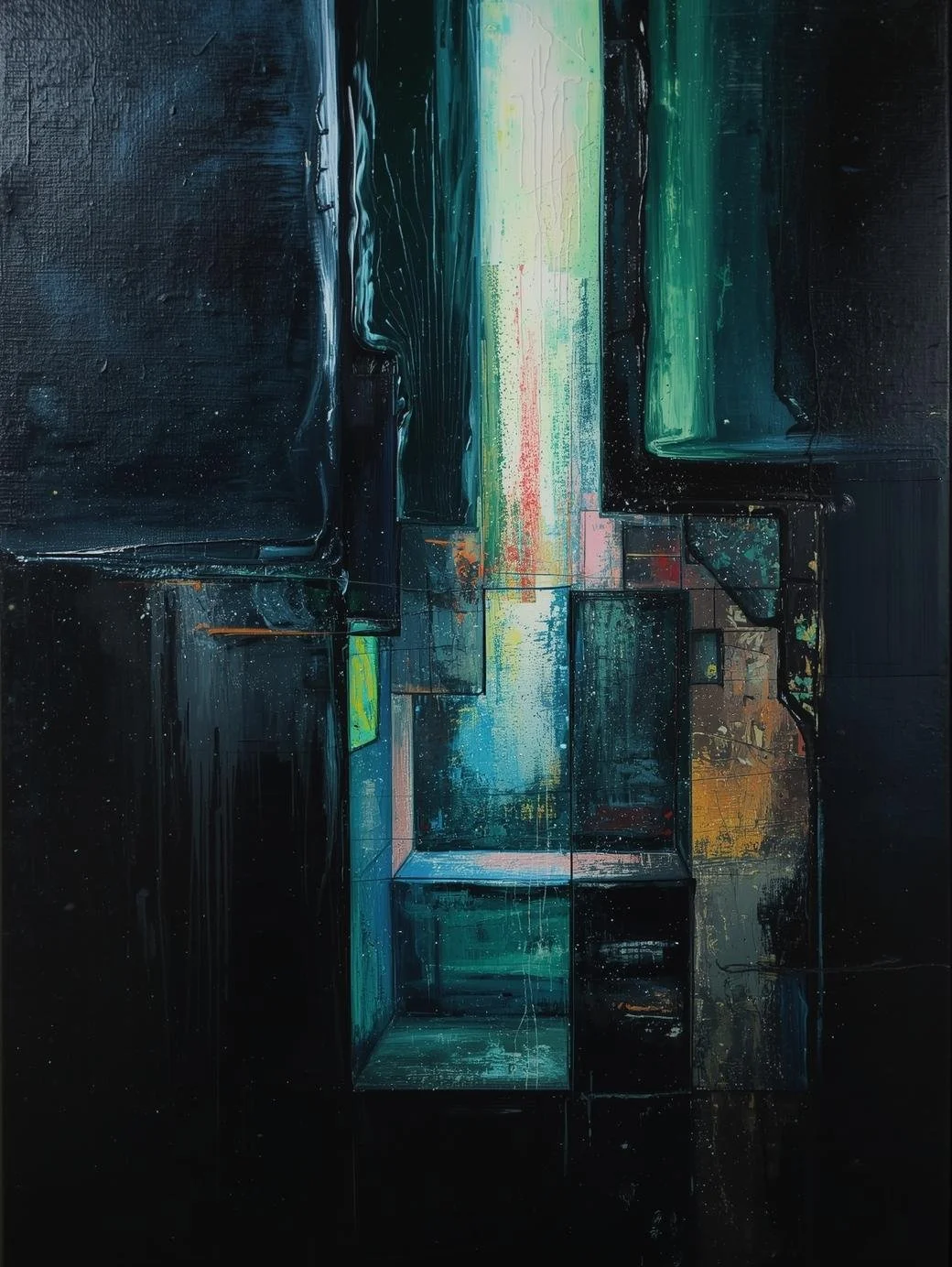
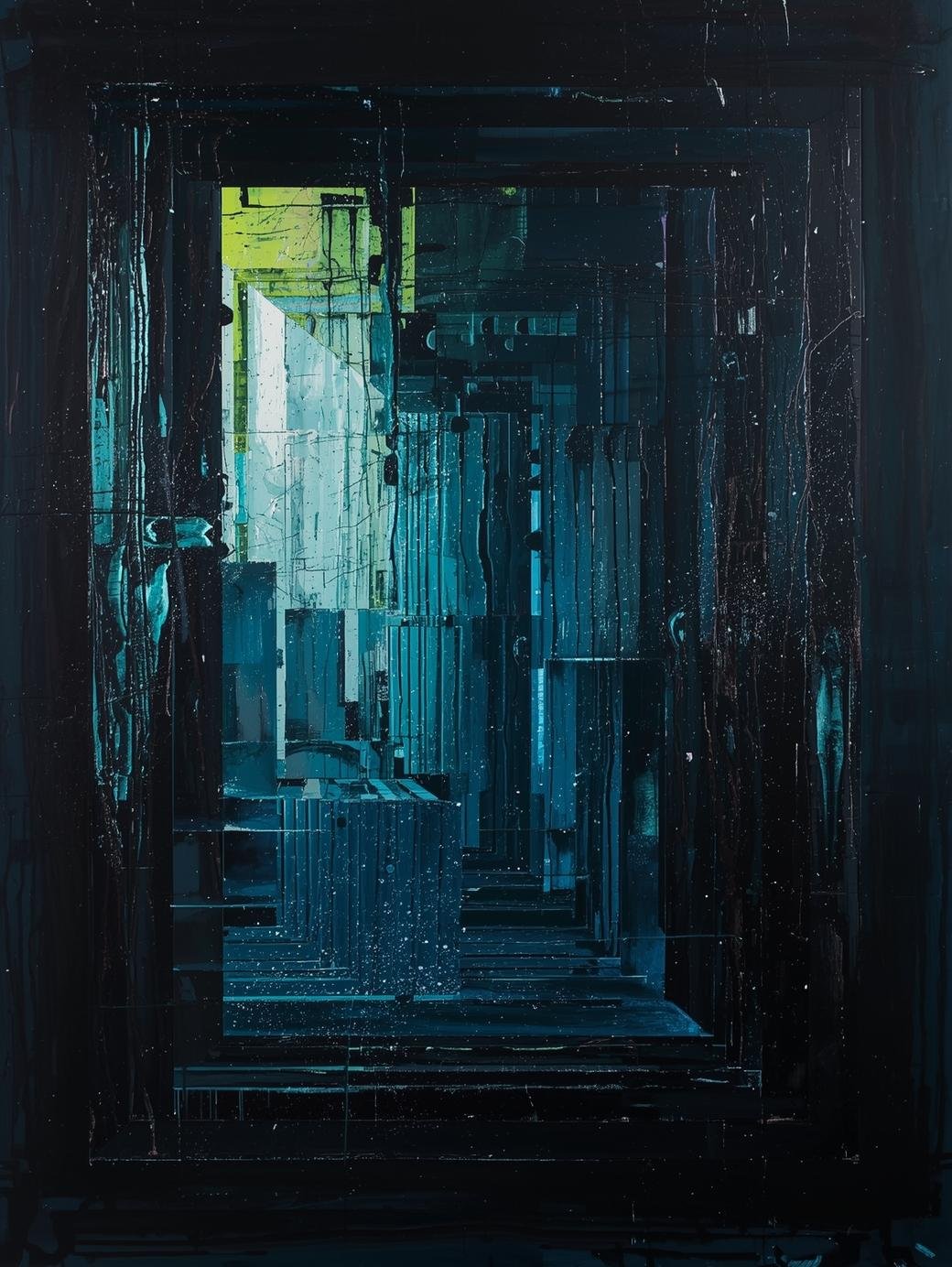
David Lynch’s cinema is a map of hidden worlds, where suburban normality bleeds into nightmarish surrealism, and light itself seems conspiratorial. Blue Velvet whispers of darkness beneath manicured lawns; Mulholland Drive folds reality into dreams, where identity, desire, and memory are in perpetual flux. To paint in dialogue with Lynch is to navigate the liminal, the uncanny, and the cosmic architecture of the psyche, translating shadows, neon, and invisible tension into pigment, texture, and atmosphere.
In my canvases, the Lynchian influence is emotional cartography. Each brushstroke traces an invisible topology of sensation: the velvety black of fear, the saturated cobalt of desire, the luminous green of uncertainty. I layer these colors like portals, creating temporal depth where past, present, and imagined futures coexist, as if the canvas itself remembers what the mind only glimpses. The work becomes a universe in microcosm, where texture and hue encode psycho-emotional constellations rather than literal representation.
Juxtaposition is cosmic. Lynch’s worlds thrive on contrast: the cheerful suburb colliding with grotesque violence, seductive romance dissolving into nightmare. On canvas, I mirror this tension through interpenetrating forms and dissonant color harmonies, soft washes interrupted by jagged impasto, luminous glazes bleeding into opaque darkness. Each juxtaposition is a moment of revelation: a portal that asks the viewer to inhabit the space between certainty and illusion, attraction and dread, the known and the ineffable.
Texture becomes time and sensation. Smooth, translucent layers suggest memory’s fragility; thick, tactile ridges evoke psychic intensity, the visceral heartbeat beneath calm surfaces. Light interacts with pigment in unpredictable ways, creating surfaces that shift with perspective, echoing Lynch’s manipulation of cinematic space and perception. Painting, like his films, is a dialogue with perception, an invitation to feel the unseen architectures of human consciousness.
Philosophically, painting Lynch is an exploration of existential ambiguity and the liminality of experience. Desire, trauma, and memory coexist in temporal simultaneity, resisting linear narrative. The canvas becomes a meditation on how we inhabit both reality and its shadows, how illusion informs identity, and how emotion maps onto perception. Each mark is both question and answer, each color a vessel of tension between rationality and instinct.
Ultimately, to paint the Lynchian sublime is to embrace the cosmic, the surreal, and the emotionally fractal. The canvas is no longer just an object; it is a portal, a landscape of feeling, memory, and illusion, where the familiar is uncanny, the beautiful is threatening, and every viewer becomes an explorer. In this space, painting is cinematic, philosophical, and intimate: a tactile meditation on the invisible patterns of desire and consciousness.