Sentimental Value: Watching a Director Think in Images
Sentimental Value is the kind of film that feels quietly confident in its own intelligence. It doesn’t chase urgency or spectacle. Instead, it invites you to notice how carefully it has been made. Watching it, I wasn’t thinking about plot twists or dramatic peaks. I was watching a director think through framing, pacing, bodies in space, and the gentle choreography of human behavior.
What impressed me most is how intentional everything feels without ever becoming rigid. The director approaches emotion the way an artist approaches material: with restraint, curiosity, and respect. Nothing is overstated. Feelings arrive indirectly, through pauses, glances, and spatial distance. Characters don’t explain themselves; they inhabit the frame. And the film trusts us to meet them there.
There is a strong sense of choreography throughout, even in the stillness. People enter and exit rooms with purpose. Conversations are staged with subtle shifts in power who sits, who stands, who turns away. The blocking feels almost architectural. It reminded me that cinema isn’t only about dialogue or narrative; it’s about how bodies move through emotional space. In Sentimental Value, every movement feels considered, but never theatrical.
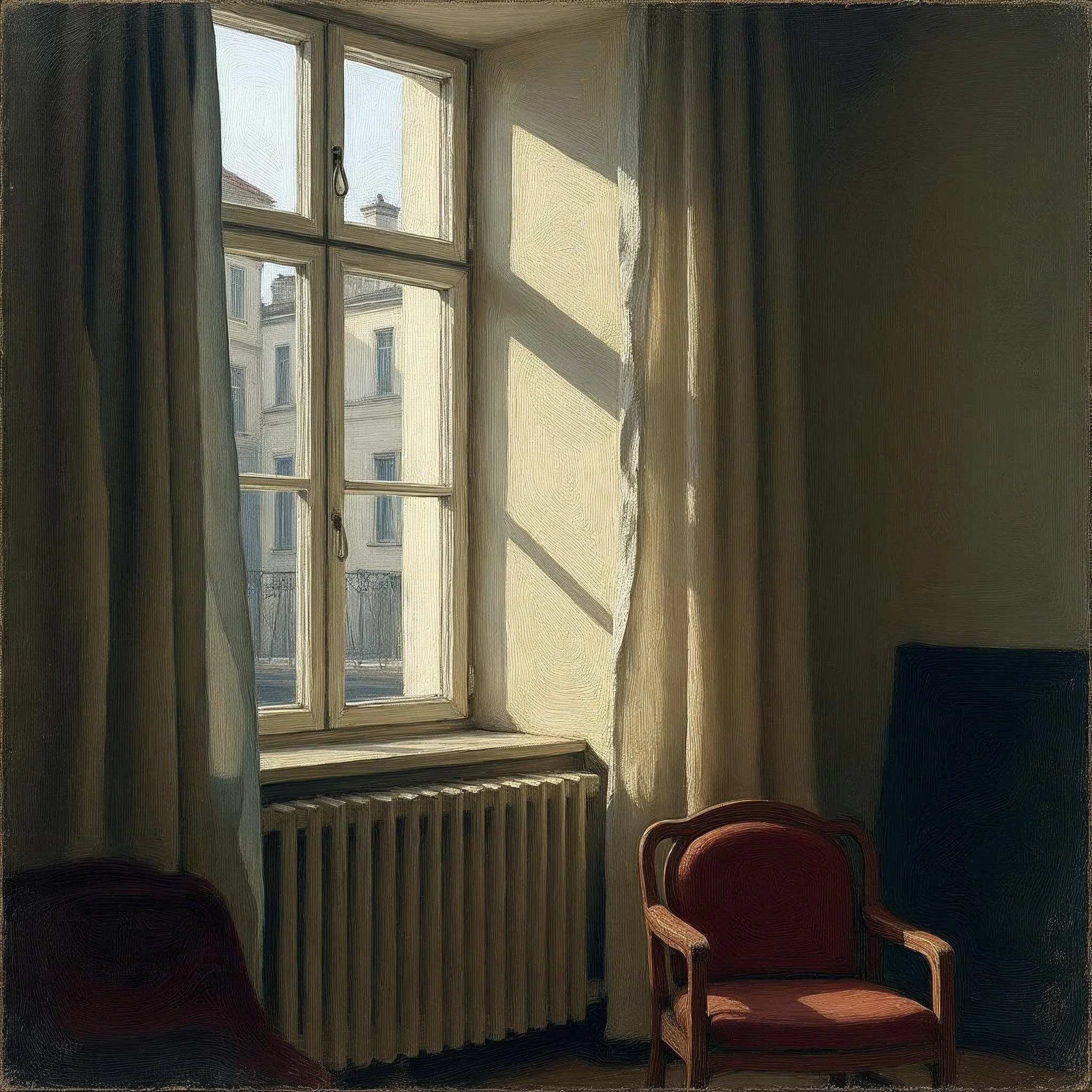
Visually, the film favors clarity over excess. The camera doesn’t show off, it observes. Frames are composed with an almost painterly patience, allowing textures, light, and negative space to do the emotional work. Interiors feel lived-in, but never cluttered. Light moves gently across faces and surfaces, like memory passing through a room. There’s a softness here that isn’t nostalgic, but precise.
What I admire as an artist is how the film understands restraint as a form of strength. Many contemporary films confuse intensity with volume. Sentimental Value does the opposite. It lowers its voice. It creates meaning through accumulation rather than impact. Scenes don’t rush to resolve; they linger just long enough to let discomfort, tenderness, or ambiguity settle in. This confidence to trust silence, to trust the viewer is rare.
The performances mirror this philosophy. Nothing feels performative. Emotion appears almost by accident: in a breath held too long, in a delayed response, in the way someone looks at an object they can’t quite let go of. The director clearly understands that intimacy doesn’t need emphasis, it needs space.
What makes the film feel contemporary is not its subject matter, but its sensibility. It understands modern emotional life: how we carry history quietly, how we avoid confrontation while craving connection, how meaning often lives in small gestures rather than grand declarations. The film doesn’t tell us what to feel. It offers a structure in which feeling can happen.
By the time it ends, Sentimental Value doesn’t leave you with a message, it leaves you with a state of mind. A heightened awareness of how images, timing, and human presence can communicate something deeply personal without ever becoming explicit. As an artist, I left the film thinking not only about cinema, but about my own practice: about pacing, restraint, composition, and the courage it takes to let subtlety speak.
It’s a film that respects its audience, its material, and its medium. And that, more than anything, is why it stays with you.