What AI Taught Me About Composition
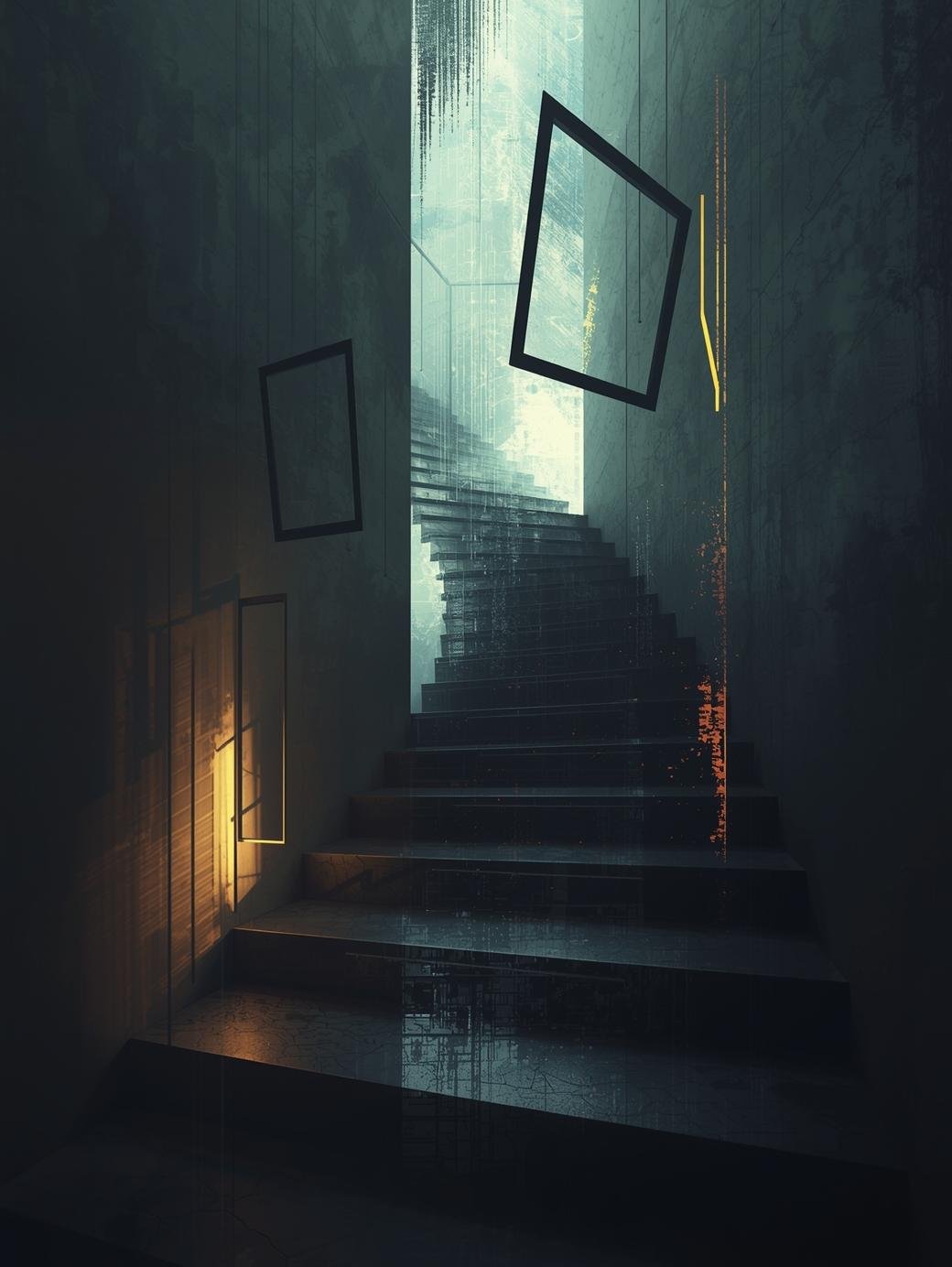
Imagine Alfred Hitchcock sitting at a computer, feeding an algorithm hundreds of frames from Vertigo, asking it to generate the “perfect” suspense shot. The machine calculates perspective, lighting, and pattern, testing iterations far faster than any human could. Would the final image retain that heartbeat of tension, or would it become sterile, too precise, too predictable?
This is what happens when I work with AI in the studio. It gives me options I could never imagine alone: patterns, color harmonies, spatial arrangements, but it can’t feel which moments are alive. That pause, that tension, that little heartbeat of drama. That’s all me.
Composition is basically rhythm. It’s how space breathes, how color draws the eye, how repetition and scale tell a story without words. AI helps me see the hidden patterns I might miss, testing thousands of arrangements in seconds. It’s like a brainstorming partner that never sleeps. But the choice of what resonates, what feels right, that’s human.
Working with AI has also changed how I notice imperfections. The machine proposes symmetry and order, but I’m drawn to the edges, the slightly off-kilter moments where tension lives. It’s cinematic: one skewed frame in a shot can make your stomach drop, and one subtle variation in brushstroke or algorithmic output can make a painting feel electric.
The process feels almost musical. A canvas is like a song: each stroke a note, each color a chord. The AI suggests riffs, counterpoints, and variations I wouldn’t think of, but it can’t feel the emotional resolution. That’s my job: picking the sequence that hits, balancing precision with instinct, and making the visual “song” sing.
Sometimes the AI surprises me in ways I didn’t expect: a diagonal cluster of texture, a gradient shifting unexpectedly, a repetition that creates rhythm without being boring. I remember one painting where a fractal-inspired suggestion completely changed the composition, it added a tension I wouldn’t have thought of, turning the piece into something alive.
This practice has also reshaped how I think about time in creation. AI works at lightning speed, generating endless possibilities. I slow down, picking, reacting, layering. The canvas becomes a conversation, a back-and-forth between human and machine. Every decision matters: which suggestion to follow, which to ignore, how to balance control and surprise.
In the end, AI doesn’t replace intuition. It sharpens it. It shows me invisible structures in space, color, and rhythm while reminding me that human choice, hesitation, and imperfection are what make a painting feel alive. It’s a partnership: the algorithm offers options, I decide what sings. And this approach also informs the editorial visuals I create, where hand and algorithm work together to turn ideas into something you can actually feel.